A Day of Exploration: Place, Service, and Inquiry Day at Cate

By Serena Zhang '28
On December 6th, the Cate community participated in various grade-level enrichment activities that brought learning and collaboration outside the classroom. Ninth-graders and their senior seminar leaders spent the day rotating through stations that combined teamwork, art, and problem-solving, while sophomores spent the day at the beach for a retreat focusing on class bonding and competition. Meanwhile, juniors and seniors went on a museum trip, visiting art and history exhibitions in Los Angeles relating to their current history studies. Across programs, students reflected on their favorite moments from the trips, what they had taken away from the experience, and their hopes for future inquiry days at Cate.
While other grade levels travelled off campus, ninth-grade students spent their day rotating through a series of hands-on stations designed to connect creativity with the material they had been learning in class. Activities included building towers with pasta, designing shapes using pieces of colored paper, and tracing shadows in an outdoor art exercise. For many students, the spaghetti tower stood out as a fun activity. Teams competed against each other to see who could build the highest tower in the shortest amount of time. Trinity Hasbun '29 shares, “We were really bonding through that activity, and it was fun having friendly competition.” Moreover, these exercises enabled students to utilize “logic, reasoning, and comprehensive skills,” as Maya Pinto '29 notes. Another highlight for the ninth-grade class was the drum circle activity at the end of the day, where students gathered on Senior Lawn and made music together. Bianca Jimenez '29 adds, “I feel like it really tied everything together. The music was a great way to end the learning.” When asked about what they felt leaving this day, the students reflected that it was a creative way to bring the class together as it offered opportunities to connect with classmates they do not usually work with, and it strengthened class dynamics early on in the year, something many agreed was valuable.
At the same time, the sophomores travelled down to Carpinteria Beach, where a full day of activities was scheduled. The class had spent the past weeks planning each competition in their own seminar classes with their senior leaders. Activities ranged from water balloon fights to soccer games, and even a human pyramid competition. According to Emmanuel Brine '28, the retreat centered around team-building by “finding out what you are good at and how you can build off of each other's strengths,” a theme that carried throughout the day. One memorable event for Emmanuel was the sandcastle challenge, where the teams built huts on the beach and tried to fit their entire group inside. He describes squeezing into these fragile huts of branches and driftwood as a moment that brought his seminar closer together. “You really feel connected with your class when you're packed into something that's about to fall over,” he jokes.

For many sophomores, the most meaningful part of the activities was seeing their class really come together. Riya Mitera '28 acknowledges, “I know some of us had doubts about ourselves before the challenges, but seeing everyone all work together, all listen to each other, made us feel so much more connected.” She shares her experience of feeling gratitude during the day, stating, “There was a part at lunch where we all went around expressing our gratitude for another teammate and our team in general.” When asked what her takeaway was from this experience, she talks about learning not only how leadership works, but also “seeing how people come together to make things work and seeing how contribution makes an actual difference.” Riya describes coming back from this trip with a newfound enlightenment of “what sem[inar] is all about.” She adds, “I feel like what we learned in class just came alive today.” When asked for their suggestions for future retreats, Emmanuel hopes for more of a “bridge between students and teachers” in terms of the clarity of the instructions for the contests. Other students point out that more planning from both students and faculty could be helpful in the future, with Riya explaining how some activities did not work, and students returned to campus late. However, she acknowledges the difficulty of planning such a big day and how the work that goes behind it does not go unnoticed.

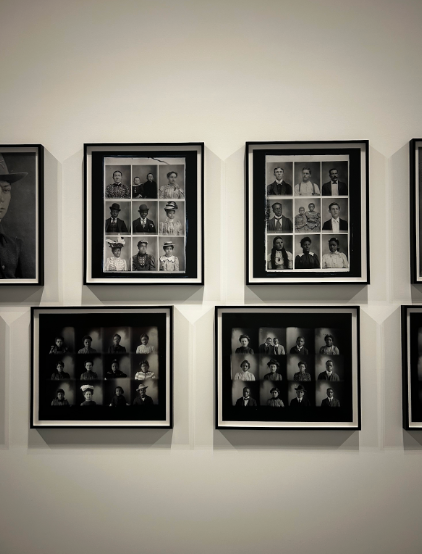
On the other hand, the junior and senior classes traveled to Los Angeles, where they spent their day learning about Confederate monuments and the current debate surrounding their public display, connecting this day to current topics the junior class are studying. In considering what society should do with these statues, Ashley Chan '27 explains how it is a complicated deliberation where people are forced to “weigh the history it conveys with the harmful messages they perpetuated.” The group visited The Brick, a gallery featuring Kara Walker’s "Unmanned Drone" , a reconstruction of the Confederate monument to Stonewall Jackson. Ashley clarifies, “The artist essentially cut the bronze monument into many different pieces and melded the pieces together in unconventional and jarring ways to urge audiences to reconsider the legacy of Jackson.” As a student passionate about art and history, Ashley shares that the experience was insightful, allowing students to “personally hear the curators of the exhibits and see the drafts and revisions of what the artist was planning to do with the sculpture after acquiring it.” Students also visited MONUMENTS, an exhibition at the Museum of Contemporary Art (MOCA), where they examined various forms of art that explored similar themes to the Confederate monuments. The artworks had a great variety, ranging from 3D models to paintings, and even a song. One memorable moment for the students was seeing the portraits of the Ku Klux Klan by artist Andres Serrano. As Mo Kanda-Gleeson '26 describes, “The composition of the photos was relatively simple, just close-up pictures of the clan members against a black background, but the images were really eerie and disturbing and really stuck with me. But at the same time, seeing this display prompted some of the most interesting conversations between both teachers and students, and we essentially considered the context and ethics of the photographs, as well as expressing some disbelief towards the influence and ideology of the Klan and the fact that they are still active today. The whole exhibition was honestly super powerful, and there was a pretty haunting mood to the whole thing.” For many students, this experience deepened their thinking about how history and legacy are considered within public memory. “We often talk in history class about who gets to control the narrative in terms of how history is told,” Ashley shares, “but typically this discussion is limited to written history, with textbooks being the main example. However, seeing this exhibit really compelled me to consider these same ideas in the context of art and the ways in which people can reclaim these narratives in more unconventional ways. For example, with “Unmanned Drone,” getting to hear about the ways the artist deliberately chose to exclude parts of original monument, like the Jackson’s head, and hearing about how the artist made an active decision to reconstruct the statue, as opposed to, for example, just melting it down, made me realise just how many different factors can influence our understanding of truth and history.”

Though intellectually rich, the long trip left many students exhausted by the end of the day. Elliott Paige '26 points out that for students, especially seniors who are currently in their college application season, the full-day commitment left them with less time to catch up on schoolwork or get rest on the weekends. He notes that “while the experience was engaging and deeply educational, it functioned more like an academic field trip than a weekend retreat”, and suggested that students would be better supported if the programming were moved to a weekday. This way, students could fully enjoy the museum visits without worrying about work. Regardless, Elliott agrees that engaging directly with controversial art pieces in history made the experience a powerful one.

Across all grade levels, the weekend enrichment programming showcased the many ways learning can extend beyond the traditional classroom. Ninth-graders strengthened their teamwork through creative challenges, sophomores united as a class in a lively retreat, while juniors and seniors explored the idea of public memory through art exhibitions in Los Angeles. The day served as a reminder of Cate's commitment to supporting growth in various forms, providing students with the opportunity to reflect on complex questions and engage with one another in meaningful and memorable ways.


Comments